)
)
Roula Sabouni, Secretary-General at FIABCI Emirates
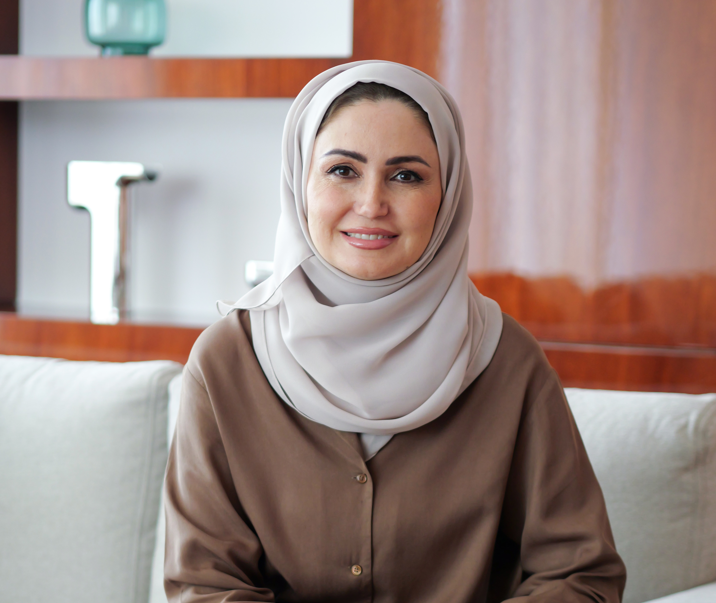
Roula Sabouni, Secretary-General at FIABCI Emirates
1. Introduction – Background & Experience
- Could you please introduce yourself and share your professional journey leading to your role as Secretary-General of FIABCI Emirates?
My name is Roula Sabouni, and I’m the Founder and CEO of Aludra Estates as well as the Secretary-General of FIABCI-Emirates. My professional journey spans over two decades in the real estate industry, where I’ve had the privilege of leading major investment, development, and sales initiatives across Dubai’s most iconic projects. I began my career with Nakheel, later taking on senior leadership roles as Senior Director at Emaar, Vice President of Sales at Dubai Holding and Meraas, where I contributed to developments including Burj Khalifa and several large-scale master plans. Today, through Aludra Estates, I work closely with investors to build long-term portfolios and support developers with advisory, from concept to post-sales execution. My focus has always been on creating value, driving profitability, and building strong brands. My journey with FIABCI Emirates stems from this same passion for advancing the real estate profession.
What drew you to the real estate and urban development space and how has your perspective evolved through your leadership at FIABCI?
What first drew me to real estate and urban development was seeing how our work could tangibly shape lives; creating homes for families, turning plans into thriving communities, and helping investors achieve and even surpass their goals. Over the years and through my leadership at FIABCI–Emirates, as I’ve worked across some of Dubai’s most iconic developments, that passion evolved into a broader vision: real estate is not just about transactions but about creating sustainable ecosystems that respond to how societies grow and change.
2. Global Real Estate Landscape & FIABCI’s Role
- How would you describe the current dynamics of the real estate market in the UAE and the broader MENA region?
The UAE real estate market continues to demonstrate strong momentum in 2025, underpinned by sustained investor confidence paired with population growth. Residential prices in Dubai have risen while off-plan transactions continue to account for a large portion of total sales transactions in the UAE, highlighting investor appetite and developer activity. Across the wider MENA region, fundamentals remain strong as well, driven by the region’s continued urbanization, diversification, and government led projects.
- How does FIABCI, as a global federation, support sustainable real estate development and cross-border collaboration among its members?
FIABCI plays a vital role in globally advancing sustainable and connected real estate. As an international federation present in 83 countries, it provides a platform where developers, investors, policymakers, and academics collaborate to exchange knowledge, and drive innovation. Through its Sustainable Development Goals Program and partnerships with UN-Habitat, FIABCI actively supports initiatives that align urban growth with environmental and social responsibility. For our members, this translates into access to cross-border investment opportunities.
3. UAE as a Global Real Estate Hub
- From your vantage point at FIABCI Emirates, what makes the UAE and Dubai in particular a compelling destination for international real estate investors?
The UAE, and Dubai in particular, continue to stand out as one of the world’s most attractive and resilient real estate investment destinations. Beyond its strategic location and world-class infrastructure, Dubai offers strong governance, investor-friendly regulations, and a tax-efficient framework. The city’s consistent international demand, coupled with its safety and global connectivity, provides a solid foundation for long-term investment. This strength is underpinned by a clear urban vision set out in the Dubai 2040 Urban Master Plan and the Dubai Economic Agenda D33, which are already transforming the city’s landscape and positioning it alongside global hubs such as London, Singapore, and New York. With a steadfast focus on innovation, sustainability, and diversification, Dubai continues to evolve; offering developers and investors visibility and confidence.
- Could you share a recent initiative or collaboration within FIABCI that exemplifies the UAE’s growing influence in global real estate?
In 2024, FIABCI Emirates launched the PropTech Council in collaboration with key stakeholders to position the UAE as a leading regional hub for digital real estate innovation. The Council drives collaboration between real estate and technology companies, supports PropTech startups through mentorship and investor connections, and promotes education, research, and policy advocacy. This initiative reflects FIABCI Emirates’ growing global influence by bridging local innovation with its worldwide network.
4. Policy, Investment & Urban Challenges
- How can organisations like FIABCI act as a bridge between policymakers, investors and urban innovators?
By facilitating dialogue and knowledge exchange, FIABCI helps translate policy visions into practical, investment-ready frameworks and ensures that innovation in design, sustainability, and technology is supported by the environments. Through global conferences and partnerships, FIABCI enables cross-border collaboration and encourages cities and developers to adopt best practices that balance profitability with long-term urban impact.
5. Innovation, Sustainability & Smart Cities
- In your opinion, what role will innovation and sustainability play in shaping the future of real estate development in the Emirates?
Innovation and sustainability are no longer optional; they’re defining the future of real estate in the Emirates. We’re seeing a clear shift from traditional development models toward data-driven design, smart infrastructure, and green building standards that prioritize efficiency and wellbeing. The UAE’s commitment to Net Zero 2050 and ongoing investment in proptech, renewable energy, and sustainable urban planning are setting new benchmarks for the region.
6. Collaboration & Knowledge Exchange
- How important is global knowledge exchange in real estate and what are some ways FIABCI facilitates that among its 60+ member countries?
Global knowledge exchange is essential to the progress of real estate; it’s how we move from working in silos whether as individuals or corporations to building smarter, more sustainable cities all together. FIABCI’s strength lies in its truly international network where professionals, academics, and policymakers share insights, case studies, and best practices across markets. Through summits and specialized committees on sustainability, proptech, and urban planning, FIABCI enables members to learn from each other’s experiences and apply global lessons locally. This exchange not only raises professional standards but also fosters cross-border collaboration and investment.
- What do you see as the next frontier for global collaboration in real estate, particularly between the UAE and international markets?
The next frontier for global collaboration in real estate will center on technology and capital connectivity. The UAE is uniquely positioned to lead this shift; it’s already a hub for international investment, innovation, and dialogue. We’re seeing growing interest in cross-border partnerships that combine global capital with the UAE’s vision-driven urban strategies, particularly in green development, digital real estate solutions, and smart-city infrastructure.
7. The RISE Platform & Global Investment Dialogue
- What are your thoughts on initiatives like RISE 2026 and its potential to connect global real estate leaders and investors? How do you envision FIABCI Emirates contributing to the success of RISE as a platform for transformative partnerships?
Initiatives like RISE 2026 play a vital role in strengthening the global real estate ecosystem, particularly in a hub like the UAE. At FIABCI–Emirates, we view RISE as a key platform to connect international expertise with local opportunity - uniting policymakers, investors, and developers to drive meaningful collaboration. Leveraging our global network across 83 countries, we aim to contribute through curated knowledge sessions and cross-border dialogues focused on innovation, sustainability, and governance.
)
)